
2027 Ford Explorer 3rd Row Seating and Interior Dimensions
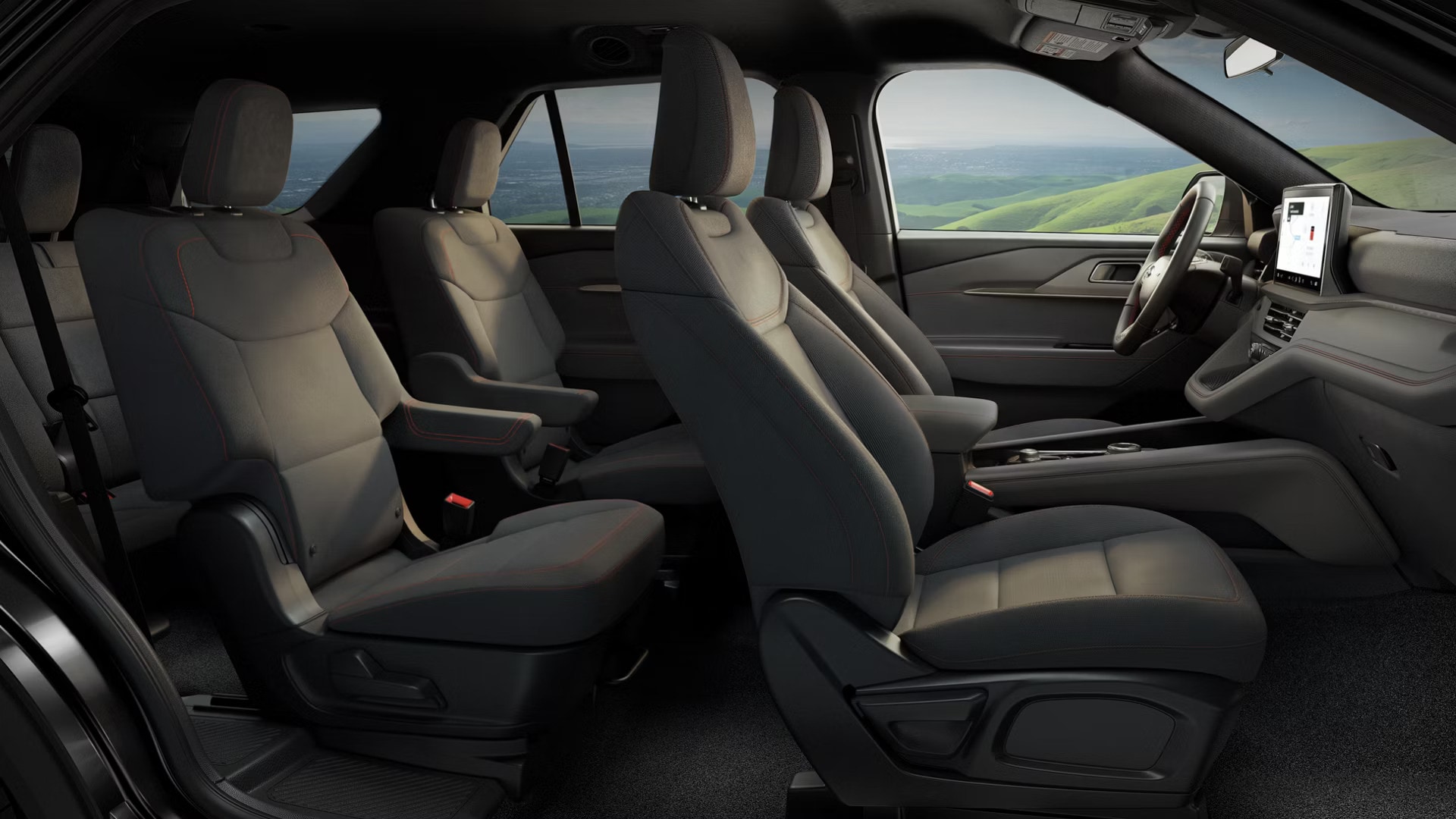
The 2027 Ford Explorer fits seven passengers with 31.8 inches of third-row leg room and 85.8 cubic feet of maximum cargo space. That cargo figure nearly triples what you get with all three rows occupied, giving families real flexibility on every trip. This page breaks down every interior dimension by trim so you can find the right Explorer at George Coleman Ford.
Feature Overview: Why the Explorer's Interior Dimensions Matter
Seven-seat SUVs are common. Seven-seat SUVs with genuinely usable third rows are not. The 2027 Ford Explorer earns that distinction through a combination of a 119.1-inch wheelbase, a multi-link independent rear suspension that keeps the floor flat, and 198.7 inches of overall length packaged to prioritize passenger space over cargo-bay depth.
The result is a cabin that delivers 150.3 cubic feet of total passenger volume on Active and ST-Line trims. Shoulder room in the second row reaches 61.9 inches, and third-row shoulder room comes in at 54.6 inches, which keeps three adults from pressing into each other on longer drives out of Travelers Rest or Greenville toward the mountains or the coast.
Cargo versatility matches the passenger story. Behind the third row you have 16.3 cubic feet, enough for a full set of carry-on bags or a weekend's worth of gear. Fold the third row and that jumps to 46 cubic feet behind the second row. Drop all rear rows and the Explorer opens to 85.8 cubic feet, which puts it in genuine competition with larger three-row crossovers. EPA fuel economy and class comparisons.
How It Works: Architecture Behind the Space
Independent Rear Suspension
The Explorer's interior volume comes from deliberate chassis choices, not just a stretched body. The rear multi-link independent suspension uses a 21.7-millimeter hollow stabilizer bar, which allows engineers to tuck the suspension components lower and push the floor of the third-row footwell down. That directly translates into the 31.8 inches of third-row leg room listed in Ford's specs.
Head Room Across All Three Rows
Head room in the third row reaches 38.9 inches on trims without a panoramic moonroof. First- and second-row head room sits at 40.7 and 40.5 inches respectively, both generous numbers for a vehicle that measures only 69.6 inches tall on Active and ST-Line trims.
Hip Room and Passenger Comfort
Hip room across all three rows is worth noting for buyers who prioritize comfort on long hauls. First-row hip room is 59.2 inches, second-row is 59.1 inches, and third-row hip room is 40.9 inches. The near-identical numbers between rows one and two reflect the Explorer's priority on keeping rear passengers equally comfortable, not just rear passengers who drew the long straw on seating assignments.
Power Liftgate and Cargo Access
The power liftgate, operable via the key fob, makes accessing that cargo area straightforward when your hands are full. The liftgate opening complements the flat load floor created when the third row folds, keeping cargo loading practical rather than awkward.
Across the Trims: Seating and Space by Configuration
Interior dimensions are not identical across every Explorer trim. Here is how they break down:
Active and ST-Line
Both trims seat seven and deliver the full 150.3 cubic feet of passenger volume. Maximum cargo reaches 85.8 cubic feet. Ground clearance on both is 7.6 inches. These trims use the 2.3L EcoBoost four-cylinder producing 300 hp and 310 lb-ft of torque, paired with a 10-speed automatic.
ST
The ST seats seven and carries 85.3 cubic feet of maximum cargo. Passenger volume is 149.5 cubic feet. Leg room in rows one and two each give up a fraction of an inch compared to Active, at 42.9 and 37.0 inches respectively, while third-row leg room holds at 31.8 inches. The ST rides on a 7.8-inch ground clearance. It pairs the standard 3.0L twin-turbo EcoBoost V6 with available intelligent all-wheel drive.
Tremor
The Tremor seats six rather than seven, which affects second-row configuration. Passenger volume drops to 149.5 cubic feet. Maximum cargo is 85.3 cubic feet. Ground clearance rises to 8.7 inches, the tallest in the lineup, which adds approach angle capability (24.1 degrees) for buyers who take SC mountain backroads seriously. The Tremor comes standard with intelligent 4WD and is available with the 3.0L V6.
Platinum
The Platinum seats seven and delivers 85.3 cubic feet of maximum cargo. Passenger volume is 143.8 cubic feet because the optional panoramic moonroof reduces head room in the first row to 38.9 inches and the second row to 38.2 inches when equipped. Without the moonroof, head room matches the other trims. Ground clearance on the Platinum is 8.3 inches. The 3.0L twin-turbo V6 is available, and intelligent 4WD is optional.

Real-World Benefit: What These Dimensions Do for Your Family
Numbers on a spec sheet land differently when you map them to actual use. Here is what the Explorer's interior geometry means day to day for families in and around Travelers Rest and the surrounding Upstate South Carolina area.
The 31.8 inches of third-row leg room is enough for an average-height adult to sit without a compromised posture on a 45-minute drive. That matters for carpooling situations where the youngest family member does not always get the back row by default.
The 16.3 cubic feet behind the third row handles a soccer bag, a stroller, or a week's worth of groceries alongside a full passenger load. Families do not have to choose between bringing everyone and bringing everything.
When third-row passengers are not along for the ride, folding that row opens 46 cubic feet, transforming the Explorer into a practical hauler for Costco runs, hardware-store trips, or camping supply loads heading toward Caesars Head State Park. The full 85.8 cubic feet puts hauling capacity on par with many larger body-on-frame SUVs.
The 360-degree camera (standard across all trims as part of Ford Co-Pilot360) helps when parking a 198.7-inch vehicle in tight spots, which is a genuine convenience in older downtown areas where lots were designed for shorter cars.
How It Compares: Explorer vs. the Three-Row Competition
The Explorer's 85.8 cubic feet of maximum cargo and 150.3 cubic feet of passenger volume position it at the upper end of its class. Many three-row midsize SUVs offer third-row leg room in the 27-to-30-inch range, which functionally limits that row to children. The Explorer's 31.8 inches pushes past that threshold.
The 119.1-inch wheelbase is competitive within the segment. Rivals in this class tend to trade interior volume for exterior styling decisions that pinch head room or shoulder room. The Explorer's 54.6 inches of third-row shoulder room is one of the stronger numbers in the segment, which means three passengers across the back row is genuinely possible rather than technically possible.
Ground clearance across trims ranges from 7.6 to 8.7 inches depending on configuration. The Tremor's 8.7-inch clearance and 24.1-degree approach angle separate it from most three-row crossovers that offer no true off-road or rugged-terrain variant.
Towing capacity of 5,300 pounds means the Explorer does not sacrifice capability for cabin size. Ford towing guidelines and ratings.
See the 2027 Ford Explorer at George Coleman Ford in Travelers Rest
The third-row seat in the 2027 Explorer is designed to be used, not apologized for. With 31.8 inches of leg room, 54.6 inches of shoulder room back there, and up to 85.8 cubic feet of cargo when those rows fold flat, this SUV handles real family loads rather than theoretical ones. George Coleman Ford serves buyers across Travelers Rest, Greenville, Spartanburg, and the Upstate region. Check inventory availability now, and the team can walk you through every trim's specific configuration so you pick the one that fits your family's actual dimensions, not just the average.
Frequently Asked Questions
How much third-row leg room does the 2027 Ford Explorer have?
The 2027 Ford Explorer provides 31.8 inches of third-row leg room across all trims. That measurement is consistent whether you choose the Active, ST-Line, ST, or Platinum.
Does the 2027 Explorer's third row fit adults comfortably?
Yes, for average-height adults on shorter to medium-length trips. At 31.8 inches of leg room and 54.6 inches of shoulder room, the third row accommodates adults, though taller passengers will find the second row more comfortable on longer drives.
How many people does the 2027 Ford Explorer seat?
Most 2027 Explorer trims seat seven passengers. The Tremor is the exception, seating six due to its second-row configuration.
What is the cargo capacity of the 2027 Ford Explorer with the third row up?
With the third row in place, the 2027 Explorer offers 16.3 cubic feet of cargo space behind it. Fold the third row and you get 46 cubic feet behind the second row. Maximum cargo with all rear rows folded is 85.8 cubic feet on Active and ST-Line trims, and 85.3 cubic feet on ST, Platinum, and Tremor trims.
Does the moonroof affect head room in the 2027 Explorer?
Yes. On the Platinum trim with the available panoramic moonroof, first-row head room drops from 40.7 to 38.9 inches and second-row head room drops from 40.5 to 38.2 inches. Third-row head room stays at 38.9 inches regardless of moonroof configuration.
What is the overall length of the 2027 Ford Explorer?
The 2027 Ford Explorer measures 198.7 inches long across all trims, with a 119.1-inch wheelbase.
Which Explorer trim has the most ground clearance?
The Tremor leads with 8.7 inches of ground clearance. The Platinum follows at 8.3 inches, the ST at 7.8 inches, and the Active and ST-Line at 7.6 inches each.
Can I see 2027 Ford Explorer inventory at George Coleman Ford?
Yes. George Coleman Ford in Travelers Rest carries 2027 Explorer inventory across multiple trims. Browse available configurations online, or contact the dealership to ask about specific seating and cargo setups.